

Interview with Lucy Smith
Author of 'Lord of Shadow and Blood', Book 1 in the 'Courts of Daemonium' series

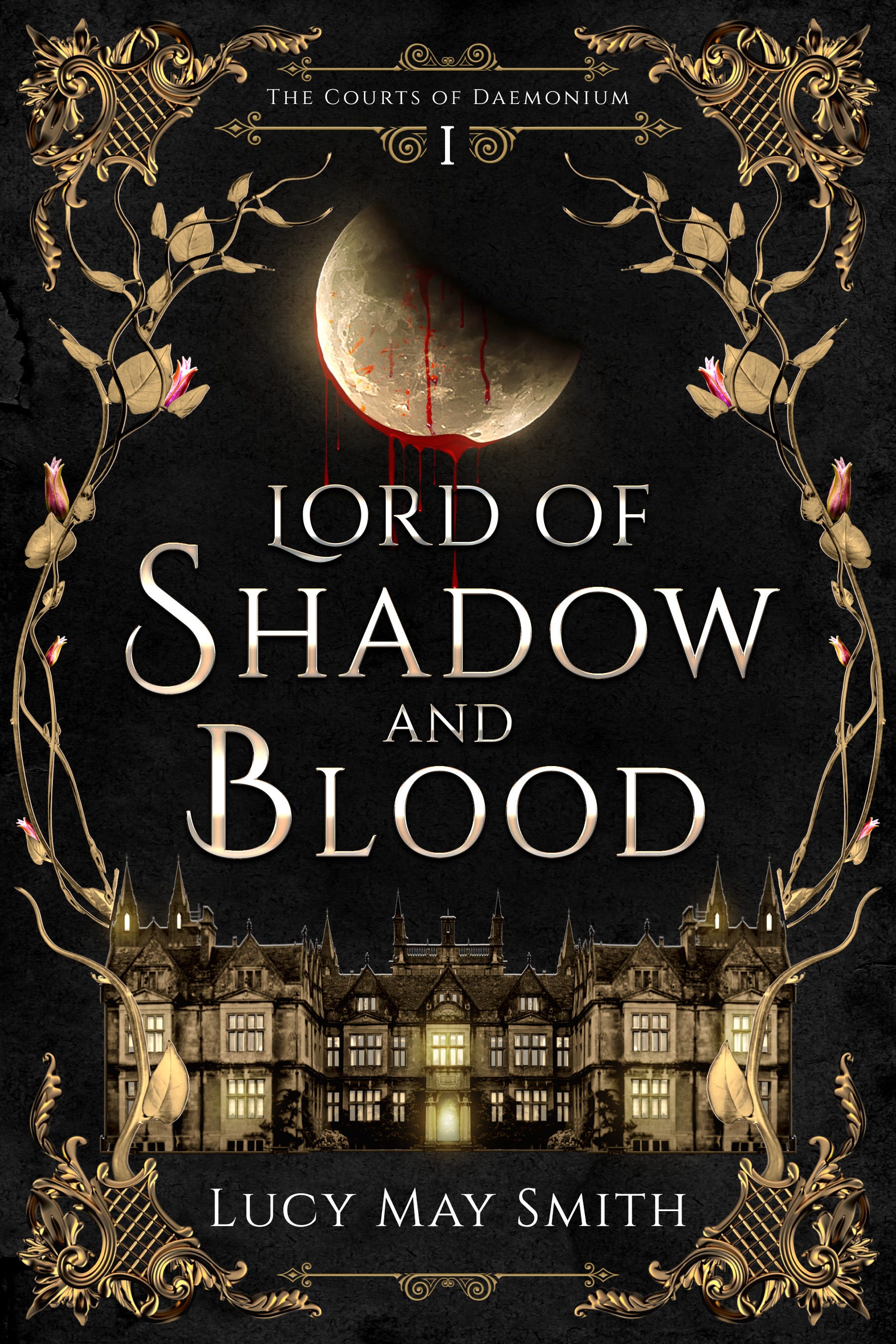
Hi all, and welcome back to rumblewrites. This week I am very excited to introduce my Internet friend Lucy’s debut novel: Lord of Shadow and Blood. Book 1 of her Courts of Daemonium series, this is a new adult dark fantasy book that is bound to blow your socks off. Stick around for passionate romance, morally grey characters, political intrigue, and lots of mythological lore!
I’m on Lucy’s ARC team for this book, and I couldn’t be happier to be supporting her writing and this project. Lucy is self-publishing, so any support would be welcome!
You can also check out my previous interviews with authors here, and subscribe for more:
Interview
Hi Luce, can you tell me a bit about yourself?
I’m Luce, a 26-year-old debut indie author based in Manchester. My writing centres around the dark fantasy genre, with a current focus on contemporary fantasy settings, twisted romance, and Gothic horror elements. With an academic background in forensic psychology and a current role in research, writing is my essential method of escapism, whether it be through my ongoing novels, or a series of one-liners that occasionally grow into lyrics. I am also the proud Co-Founder and Managing Editor of Twisted Thorn Editing House Ltd.
When not immersed in my fictional worlds, I am the singer, songwriter, and keys player for my band, drawing inspiration from blues, folk-horror, and psychedelic rock. I have a terrible tattoo addiction that I have absolutely no interest in remedying, spend too much money on pretty books, records and DnD dice, and will likely have back problems by the time I’m 30 from hunching over my desk for too long when I’m manically plotting my books.
Now, I’ve already got my hands on an ARC of Lord of Shadow and Blood but for the benefit of my readers, can you tell us what it’s about?
Lord of Shadow and Blood is a dark contemporary fantasy novel that introduces my series, The Courts of Daemonium. It primarily focuses on the story of Adriana, a second generation light-summoning Incantrix (witch), and Xander, the first ever Lamia (vampire) with shadow-wielding and mind-warping magic. The story begins when 26-year-old Xander and his brothers-in-arms are brutally transformed into the first Lamiae by Lilith, the Mother of Daemons. Decades later, with the formation of the Courts of Daemonium—a council of Lilith’s first Daemons consisting of the Lamiae, Incantrices, and Lupi (werewolves)—Xander is summoned to Cornwall in 1882 by Striga, the leader of the Incantrices. There he encounters 20-year-old Adriana, whom he briefly met eight years prior during a previous episode of falling prey to Lilith’s manipulative control. Xander reluctantly becomes her teacher to help her strengthen her magic, knowing they need her gifts to defeat Lilith and her son, Caligo. Their antagonistic relationship evolves into something so much more than either of them expected. Terrified of his bloodlust and desire for Adriana, Xander is forced to battle his inner Daemon every day, and risks losing himself entirely, as well as her.
You can expect passionate romance, morally grey and deeply flawed characters, the intertwining of paranormal creatures into a distorted reality of our world, and all deliciousness of a fantasy novel steeped in lore inspired by Latin mythology. But what you might not expect are the dark twists along the way.
Romantasy books are all the rage at the moment, but yours is definitely on the darker end of the spectrum. In both Xander and Adriana, we find characters tormented by demons, both literal and figurative. Did writing this help you explore aspects of your own mental health? And was it in any way therapeutic?
I wanted Adriana, Xander and all of my central characters to portray various mental health difficulties, some of which I have personally experienced. While the book is focused on the magical and paranormal elements expected of fantasy novels, if you take away those aspects, what you’re left with is a young woman struggling with manic depression and a young man refusing to acknowledge his trauma and anxiety. Mental health is such an important subject that is fortunately being spoken about with far less stigma nowadays, so I wanted this story to add to that wider discussion and awareness. I wanted to show how it is perfectly okay to feel terrible some days, it’s understandable to want to push trauma aside, and it’s admirable to continue through each and every day when all you want to do is give up. Acceptance is such a huge theme in the book, as well as the full series, in many ways. And sometimes accepting ‘I am who I am, I feel how I feel, and that’s okay’, is the best thing you can do.
As someone who has bipolar type II, writing Adriana and Xander’s journeys has been incredibly therapeutic. My work and academic experience has provided me with a lot of knowledge about mental health difficulties and all the ways they can affect someone. But I wanted to add a little bit of myself into my characters and, perhaps unknowingly at first, based a lot of their thoughts, feelings and behaviours on my own experiences. Writing it out and seeing the poor previous decisions I made when I wasn’t looking after myself really made me appreciate the person I have become. Living with bipolar isn’t always easy, nor is living with a lifelong autoimmune disease, but I’ve made it through some of my darkest days by perfecting my own coping mechanisms, opening up to people I trust, and have learnt to appreciate those dark days because they make the better ones shine even brighter. And that is something Adriana and Xander will gradually learn in this series.
Lord of Shadow and Blood is dark in another way too: for many readers, the political and social issues it explores will resonate deeply. What about the fantasy genre lends itself to exploring these hard-hitting topics?
I’m a firm believer that reading is political, and so many fantasy stories hold similarities to current or past political scenarios for a reason. Fantasy books allow us to learn about real-world politics by exploring themes of oppression, power and corrupt social structures, in a way that still allows us to escape reality. And the reality is we could all do more to help those in need and to fight for the rights of those being oppressed, we could all learn a thing or two from our fictional heroes.
I think it is so important for authors to advocate for equality, inclusivity and diversity in their books, not just in their choice of characters portrayed, but in the consequences or benefits of those characters’ actions. Through this, we can inspire engagement with social and political concerns, acceptance of those we see as ‘different’, and strive towards a kinder society. By writing a story in a fictional world that is both engaging in plot and also manages to teach valuable lessons, authors can make complex political and social issues more accessible to spread awareness. And being aware of the issues is the first step in fighting them.
The story is also steeped in lore, especially that surrounding Lilith. How much research went into writing this book?
A hell of a lot. The plot for Adriana and Xander’s story began back in the COVID lockdown, with a jumbled mess of thoughts and ideas stuck in my head. It was in 2022 that I finally began to write it down, finding that twisted love story hidden in the crazy thoughts in my mind, and then I began to research the mythology of Lilith to find my reasoning for the existence of these paranormal characters. She has always been such an intriguing figure to me, and during a particularly long manic episode (thanks bipolar), I spiralled and sat for days on end at my laptop bringing in elements of different mythology and adding the creatures created by Lilith into a distorted historical and modern society. At some point, my friend called to ask how I was and I told him, “I’ve somehow linked the mythology of Lilith to the end of an English civil war.” I then took a break from the drawing board, and multiple google docs, to let myself rest. A couple of weeks later, I came back to those sporadic notes and finally laid out a plot, which then extended into a full series.
I can’t actually share too much more about the full lore itself, as there is a lot more to be explored in the rest of The Courts of Daemonium series, as well as my next two series: a dark steampunk-inspired high fantasy, and a dark complex mythological epic fantasy. What I will say, is the lore of Courts is just the beginning, and readers of Lord of Shadow and Blood can spot a lot of hints at what is yet to come if they look closely enough.
Lord of Shadow and Blood is your first book (congrats!). Is it also the first you’ve written, or just the first to make it past the finish line?
Thank you! Aside from a few short stories, Lord of Shadow and Blood is the first full novel I’ve ever worked on. I feel extremely lucky to have been able to complete it, and still remember that strange bittersweet feeling of finishing that first draft. I felt sad that it was over, and I still feel sad that I won’t ever work on it again, but I am so proud of the story it has become.
Can you tell us about your path to publication? How long did it take? And why did you choose to self-publish?
Once I’d written my first draft, I gave it to my boyfriend, thinking he’d probably be the only person who’d ever read it. He told me over and over that I needed to publish, and even though I still don’t hold a huge amount of confidence in myself, his confidence in my work got me thinking that maybe I could consider it. So, I then sent it to a few friends I’d made on good ol’ Bookstagram and had them beta read, and following the wonderful feedback they provided, I decided to start looking into publishing.
I’d originally planned to go trad, and had plans to publish through a new independent publishing house. However, after things fell through earlier this year, I decided to bite the bullet and self publish. And I cannot express how thankful I am that things worked out this way. It has been such a steep learning curve, from learning about ISBNs and barcodes, finalising countless rounds of edits, building my own website, figuring out my way through Amazon publishing, learning how to format, commissioning artwork and book covers, and accepting that I finally needed to let go of my manuscript—it’s been a wild ride. It’s been stressful, at times painful, and incredibly eye-opening, and I’m so grateful to all my indie author and bookish friends that have helped me when I’ve needed support or reassurance.
You also co-own and run an editing company: Twisted Thorn. What’s it like juggling this with writing, and your day job? How do you find the time?
To be honest, I haven’t really had a moment to myself for the last few months, which has its downsides as it means I haven’t read for pleasure anywhere near as much as I’d want to and have to schedule in breaks from work to catch up with friends, but it’s also been really fun. I’m someone that works quite well under pressure, despite how much I complain, especially when it’s a pressure I’ve voluntarily placed upon myself because it involves things I am invested in.
My day job can be quite stressful in certain situations, but it’s also something I find incredibly interesting and definitely want to continue building a career in. My job in Twisted Thorn is my evening and weekend job, which can feel a little overwhelming at times, but it’s amazing to be able to have those opportunities to work with so many authors and support our talented clients during and beyond the editing stage. And then writing is my escape. Writing has never been stressful to me, and I’ve been fortunate enough to have never suffered from writer’s block. I have so many ideas rattling around my head, that even when I feel stuck with one story, I’ve got another one ready to go. I sometimes wish I had more time to write, but I’m not sure if that would potentially take the enjoyment out of it. Although I wouldn’t class writing-time as a rarity, it is definitely the thing I have the least time for out of my three roles. But I think that’s what makes it even more enjoyable, because it’s something I get to look forward to.
What’s the most useful thing you’ve learnt about writing a novel?
I see a lot of authors talk about how the first draft is never perfect, but I actually think it’s more than that. No, the first draft isn’t perfect, especially in terms of structure, flow, spelling, etc. But getting a solid plot and detailed understanding in the first draft has been my key to then go on to polish the story into a full novel. Having a story that I was proud of, that I knew was exactly what I would want to read, that felt unique and yet inspired by my favourite books, gave me such a great foundation to build upon. So no, the first draft isn’t perfect, nor will it ever be if you’re as self-critical as I am, but getting the mere idea of your perfect story written down is the best thing you can do.
Lord of Shadow and Blood is the first book in The Courts of Daemonium trilogy. What can readers expect in the next 2 books?
Book 2, you can expect a deeper dive into the corruption of politics and the dangers of extremist movements, as well as a strong focus on trauma and the importance of reaching out. Book 3, get ready for the wider plot and all the previously unanswered questions finally coming together, and to see a whole lot of Lilith. And I would also remind readers that things don’t always end with a happily ever after for everyone involved...
Is there a question you’ve been dying to answer about your book that no-one has asked yet?
There isn’t anything specifically about the process or anything like that, but there is one thing that none of my beta or ARC readers have asked that I hope new readers will: Why didn’t Striga warn them?
That’s all...
And finally, do you have any advice for aspiring authors?
Write what you want to write, and write what you want to read. If you’re not writing for yourself, then there is no heart or soul in your work. As a writer, editor and reader, the stories that stay with me are the ones that clearly mean a great deal to the authors. Remember that your voice is your own, and it’s okay to make mistakes because that’s how we learn and ultimately grow. Spend your time on your writing, research your topics and themes, keep reading, find your style by working out what inspires you, and be true to yourself.
And last of all, don’t fucking use AI. It’s your story, and your voice is far more interesting.
About Lucy
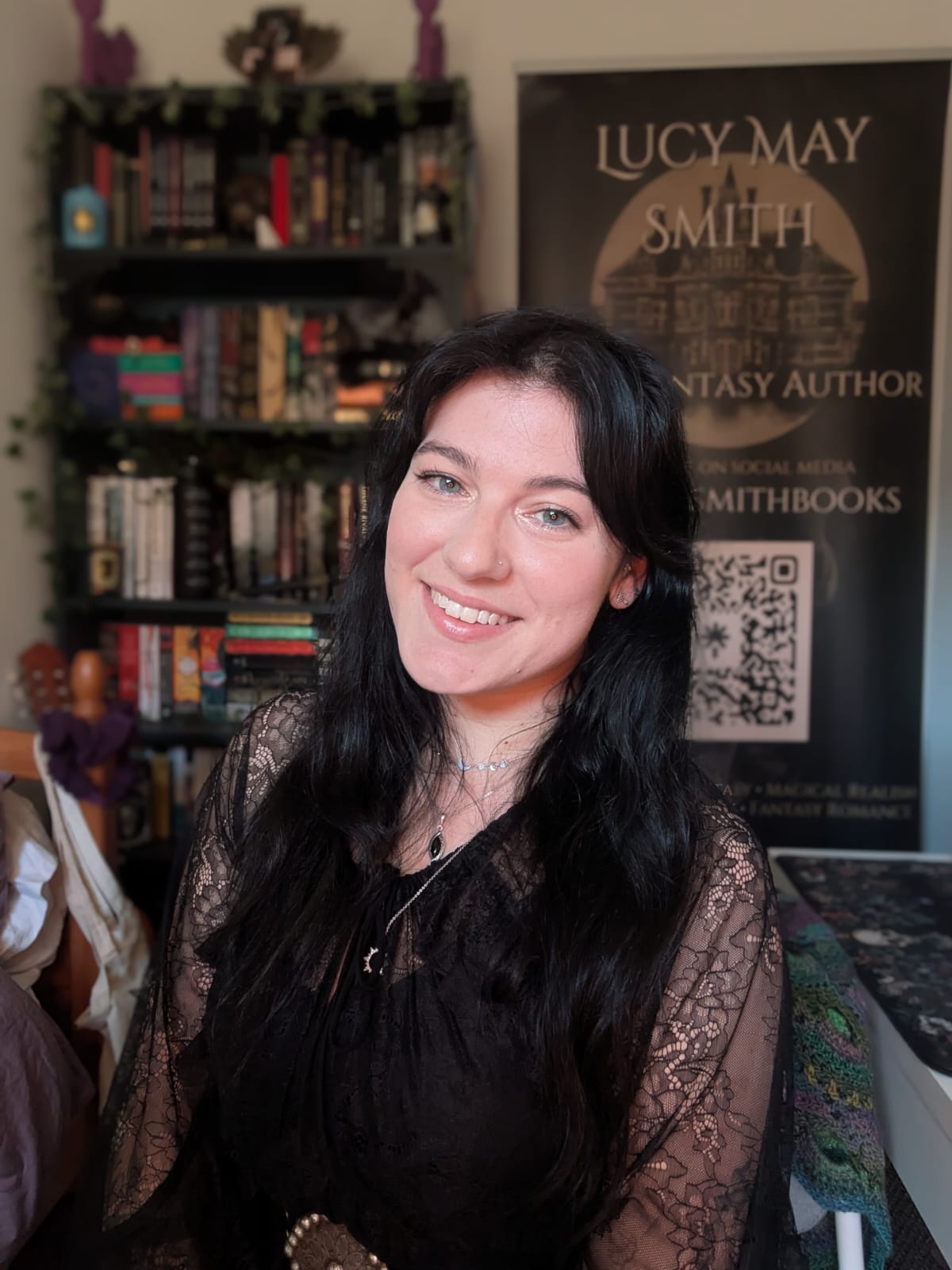
Lucy has a bit of an alternative background for a writer, coming from the world of forensic psychology research by day and becoming a dark fantasy author by night. She is also the Co-Founder and Managing Editor of Twisted Thorn Editing House, where she supports other authors to reach their full potential in-between writing her own novels.
She admits to having a tattoo and book-buying addiction, because acceptance is the first step, but still continues to justify these addictions by noting “it could be worse”. Residing in Manchester with her partner and cat, who they claim is evil and controls their lives, Lucy can often be found in a small coffee shop, dancing at a fantasy festival, jamming in a music practice room, or hunched over her desk plotting her next book.
You can find out more about her work via her website, or check out her social media: @lucymsmithbooks on Instagram, TikTok and X.
And you can order a copy of Lord of Shadow and Blood here!
She’s amazing!!