


Hi all, and welcome back to rumblewrites. This week’s post was meant to be a review of Weapons, but I’m afraid that’s been pushed back to next week. Instead, it’s been supplanted by this rambling thought piece on the Wuthering Heights trailer, which released yesterday. I was going to wait until the film came out next year, but I honestly don’t think I’m going to watch it, so here goes.
You can read my previous film reviews here (I swear they’re usually more put together than this), and subscribe for more:
Emerald Fennell, director of hit film Barbie (2023) and Saltburn (2023), has set her sights on Emily Brontë’s Wuthering Heights for her next project. Styled as an adaptation of the 1847 Gothic novel, the film stars Margot Robbie and Jacob Elordi will star as Catherine Earnshaw and Heathcliff respectively. It is set to release on 13 February 2026, just in time for Valentine’s Day.
And honestly, this tells you everything you need to know about Fennell’s version. It is purported to be erotic, and profoundly so. Apparently the film opens with a public hanging where the “condemned man ejaculated mid-execution”, which prompts the observing crowd to descend into an “orgiastic frenzy”. I don’t even know what to say to that.
But anyway, let’s take a look at the trailer:
Set to Charli xcx’s ‘Everything is romantic’, we see a descriptively-inaccurate, much aged Cathy and Heathcliffe in 1980s(?) fashion and home decor. I’m actually not mad about the song choice - I think it’s cool when directors choose to modernise elements of the narrative - but it all just feels… disjointed? Because this isn’t a modernisation, it’s a misrepresentation.
Let’s start with the basic facts. This film is an adaptation, not a modernisation, nor an interpretation, not a ‘based on’ inspiration, but a book-to-film adaptation. And therein lies the route of all my quibbles. Had this been billed as an original, I would actually be excited to see it - there’s some interesting imagery in the trailer about sexuality and BDSM. Like the lashes on Heathcliff’s back given by Hindley in their childhood, and Hindley then inflicting the same lashes on his wife. Or Isabella’s weird dog-like acting perhaps mirroring Heathcliff’s killing of her dog upon their marriage? But none of this can be remotely linked to the original text.
Nor can the physical appearance of our two protagonists be found in Brontë’s writing.
For starters, Catherine is brown-haired, and dies at age 19. While Margot Robbie is a great actress and beautiful woman, I don’t think she can pass for 19. Neither can Jacob Elordi - Heathcliff is even younger, aged around 15 at this time. I know actors are often aged up slightly in stories about teenagers, but you’d hardly excuse a 35-year-old playing Juliet in a production of Shakespeare!
Further than this, though, is the whitewashing of Heathcliff. In the text, he is described as:
He is a dark-skinned gypsy in aspect
While the race of Heathcliff has always been a subject of debate (“gypsy” did not have the same meaning as it does today), it is clear that Heathcliff is not white. And this has major connotations for the personality and treatment of his character. It is integral to the story, and to the strange love affair he has with Catherine. Quite why Fennell decided to change this (and then to cast a person of colour as Linton!) is beyond me. Perhaps it will become clear when the film is released, but I suspect the whole subject of race has been removed entirely.
I have a similar point to make about class and the apparent living situation the pair find themselves in. It is clear from the trailer that this is not a lower class family - why? Why live on the moors and work as they do if they have all this money? Where has it come from? What implications does this have for the characters? I’m unclear as to whether Fennell has thought about this, or even why it has been changed. In two respects, stories of marginalised groups have been washed away, and that doesn’t sit well with me.
And it’s not just because you’d expect the key aspects of a book to be kept in an adaptation. But it’s also because of representation. Of minority groups in media today, and to act as proof that they have been represented in the past. Might it not help reverse the rhetoric that immigration is a new issue? That racial minorities ought not to exist on the British Isles? Bigotry and hatred are on the rise in the UK and America - not everything needs to be a statement against this, but it’s important to question why these elements have been removed. Literature is by nature political and Brontë’s work is no exception. This is not just a whitewashing, it is a rejection of literary history and it’s intersection with the history of marginalised groups. In an age when fewer people are picking up books and more are becoming reliant on social media and film as a means of accessing history and literature, is it not important to be faithful to the original material? Like I said earlier, I would have no problem is this film had been billed as an original.
My last thought on this matter concerns the erotic-isation of the relationship between Catherine and Heathcliff. Anyone who’s read Wuthering Heights will know that the pair don’t exactly have the most traditional relationship, and Heathcliff’s obsession with Cathy, even post-mortum, is a staple example of longing in Gothic fiction. But at the time, and for a female author like Brontë, this was also radical. The kind of longing we see in the trailer is very different - it takes a more body-centred approach, demonstrating desire through touch rather than yearning, through kinks like whipping and play acting rather than tormented inner thoughts. Heathcliff’s obsession in the book is characterised by his lack of possession, his restraint. In the film, through physicality. Equally depraved, but modernised. This is something I could get behind if the film were a modernisation of the story as a whole, but within the context of Brontë’s own time, it feels like a reduction of the Gothic trope.
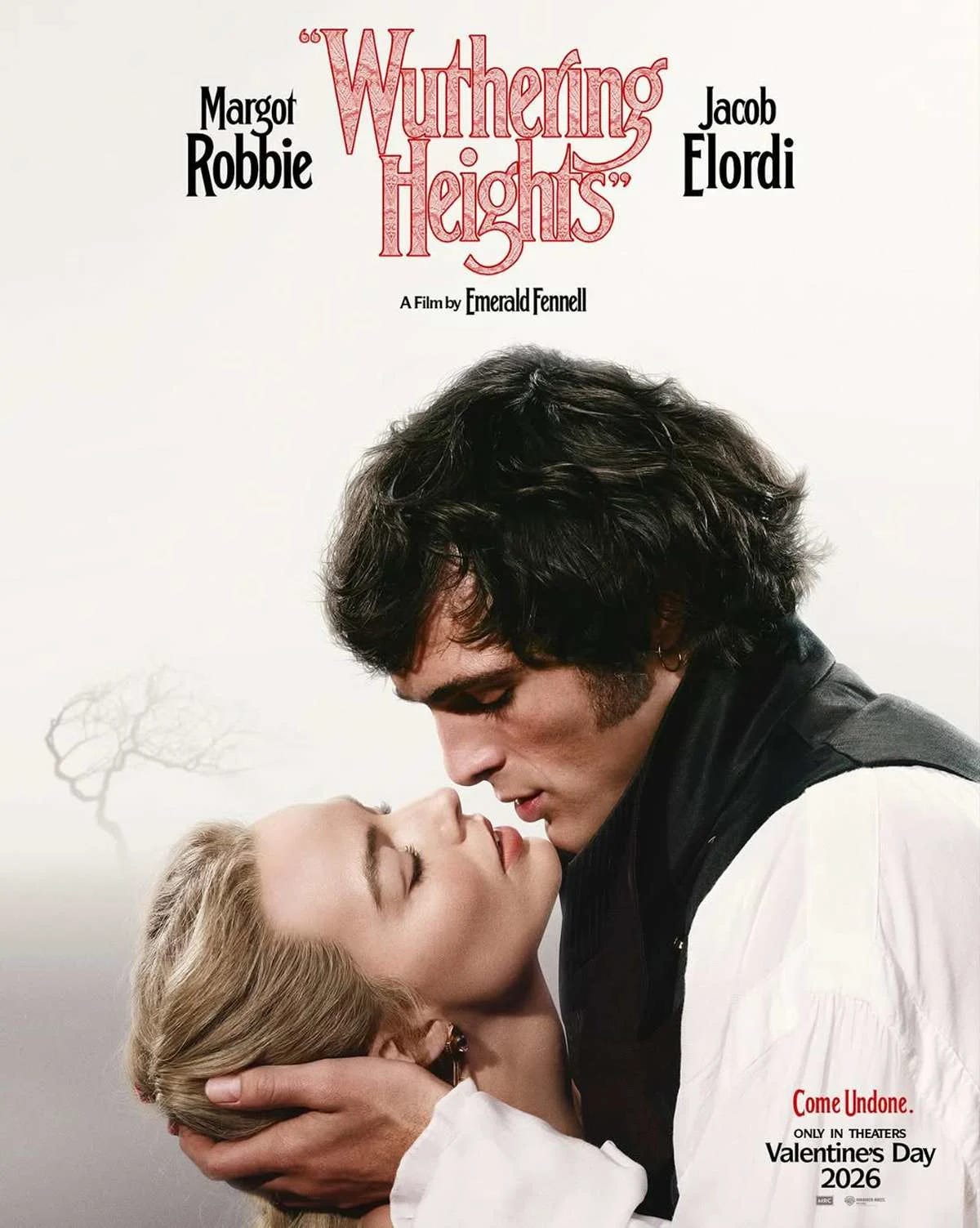
Thus ends my rambling. I apologise if my arguments aren’t particularly nuanced, or if you spot any grammatical errors - I wrote this on my lunch break and I haven’t had time to read it over! I just wanted to get this down and out.
What are your thoughts on the trailer? Does it look like a film you’d like to see? Let me know in the comments below. And please, if you disagree with me, be nice.
Greta Gerwig directed Barbie. The discourse around this trailer is all kind of fun. Emerald Fennel is definitely telling very upper class stories, and her refusing to engage with race and class is infuriating. That said there’s something interesting about yearning in literature and that made bodily when it’s translated through the medium of film, which is a visual language. I think this would a really interesting theme to explore further, especially as it pertains to changes in film production and marketing amidst this time of “peak capitalism” and “outrage marketing” techniques
Yep. I just watched the trailer.
As a long time fan of the book, this trailer is just, well...... silly.
What a waste of film making time.
Dave